
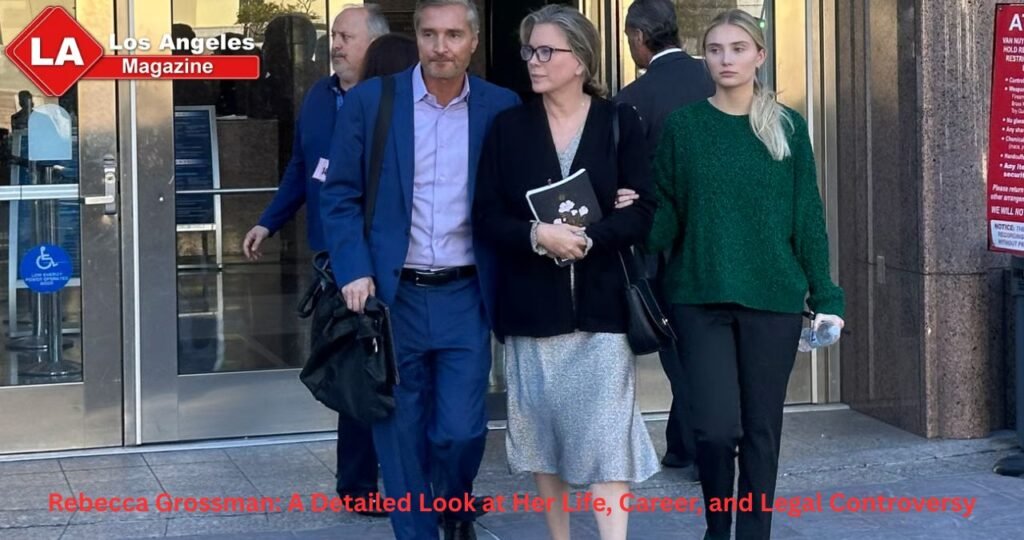

Rebecca Grossman is a name that has gained widespread public attention in recent years due to a high-profile legal case in California. Once known primarily for her involvement in philanthropy and community initiatives, her reputation has dramatically shifted following a tragic incident that sparked national discussion about accountability, privilege, and justice.
Early Life and Background
Rebecca Grossman was born and raised in the United States, growing up in an environment that offered access to education and opportunity. While much of her early personal life has remained private, she later became well-known within elite social and charitable circles. Her life appeared to follow a path of influence, community involvement, and social prominence.
She eventually married into a successful family, which further elevated her status. Her husband, a well-known plastic surgeon, contributed to their affluent lifestyle, and together they became a recognizable couple in Southern California’s social scene.
Philanthropic Work and Community Involvement
Before the controversy, Rebecca Grossman was widely recognized for her philanthropic efforts. She co-founded the Grossman Burn Foundation, a nonprofit organization dedicated to burn prevention, education, and providing resources for burn survivors. The foundation worked with firefighters, medical professionals, and communities to raise awareness about fire safety.
Through this initiative, Grossman built a reputation as a committed advocate for safety and public welfare. She participated in fundraising events, awareness campaigns, and collaborations with local authorities. Her work earned her respect among peers and positioned her as a socially responsible public figure.
The Incident That Changed Everything
Rebecca Grossman’s life took a dramatic turn following a tragic accident in September 2020 in Westlake Village, California. The incident involved a vehicle collision that resulted in the deaths of two young brothers who were crossing the street with their family.
Authorities alleged that Grossman was driving at a high speed and that her actions led to the fatal crash. The case quickly drew intense media attention due to the severity of the incident and Grossman’s social status. Public interest surged as details about the case began to emerge, including questions about speed, responsibility, and possible involvement of another driver.
Legal Proceedings and Charges
Following the incident, Rebecca Grossman was charged with multiple serious offenses, including vehicular manslaughter and second-degree murder. The charges reflected the prosecution’s argument that her behavior demonstrated a reckless disregard for human life.
The legal proceedings were complex and closely followed by the public and media. Prosecutors presented evidence aiming to establish that Grossman was driving dangerously, while the defense challenged aspects of the case, including the sequence of events and contributing factors.
Throughout the trial, both sides presented expert testimonies, accident reconstructions, and witness accounts. The courtroom became the focal point of a broader debate about justice and whether individuals of higher socioeconomic status are treated differently under the law.
Public Reaction and Media Coverage
The case involving Rebecca Grossman generated significant public reaction. Many people expressed outrage and sympathy for the victims’ family, calling for accountability and justice. Social media platforms amplified discussions, with users sharing opinions, updates, and commentary on the trial.
Media outlets extensively covered every stage of the proceedings, often highlighting Grossman’s background as a philanthropist in contrast to the seriousness of the charges against her. This contrast intensified public scrutiny and led to broader conversations about privilege, responsibility, and the legal system.
The victims’ family also became central figures in the public narrative, advocating for justice and keeping attention on the case. Their emotional testimonies and public statements resonated deeply with audiences.
Broader Implications of the Case
Beyond the individuals involved, the Rebecca Grossman case raised important societal questions. One key issue was the role of accountability in cases involving affluent individuals. Critics argued that wealth and social standing should not influence legal outcomes, while others emphasized the importance of due process and evidence-based judgment.
The case also sparked renewed discussions about road safety, reckless driving, and the consequences of negligence behind the wheel. Advocacy groups used the incident as an opportunity to highlight the importance of responsible driving and stricter enforcement of traffic laws.
Additionally, the case shed light on how high-profile legal battles are portrayed in the media. The intense coverage demonstrated how public perception can be shaped by headlines, narratives, and emotional elements, sometimes even before a verdict is reached.
Personal and Social Consequences
For Rebecca Grossman, the consequences extended beyond the courtroom. Her public image underwent a significant transformation, shifting from a respected philanthropist to a controversial figure associated with a tragic event.
Her involvement in charitable organizations also came under scrutiny, and her previous accomplishments were often overshadowed by the legal case. This shift illustrates how quickly public perception can change when serious allegations arise.
On a personal level, the case likely had profound emotional and psychological impacts on all parties involved, including Grossman, the victims’ family, and the wider community.
Lessons and Reflections
The story of Rebecca Grossman serves as a powerful reminder of the responsibilities that come with driving and the far-reaching consequences of negligent behavior. It also highlights the importance of fairness and transparency in the legal system.
For many observers, the case reinforced the idea that no individual is above the law, regardless of their social or financial standing. It also emphasized the need for empathy toward victims and their families, whose lives are permanently affected by such tragedies.
Conclusion
Rebecca Grossman’s journey from a philanthropic socialite to a central figure in a high-profile criminal case is both complex and cautionary. Her story intertwines themes of privilege, responsibility, tragedy, and justice, making it one of the most closely watched legal cases in recent years.
While the legal process ultimately determines accountability, the broader impact of the case continues to resonate. It serves as a sobering example of how a single moment can alter lives forever and underscores the importance of responsibility, both on and off the road.
As public interest in the case persists, it remains a significant reference point in discussions about law, ethics, and societal expectations in modern times.