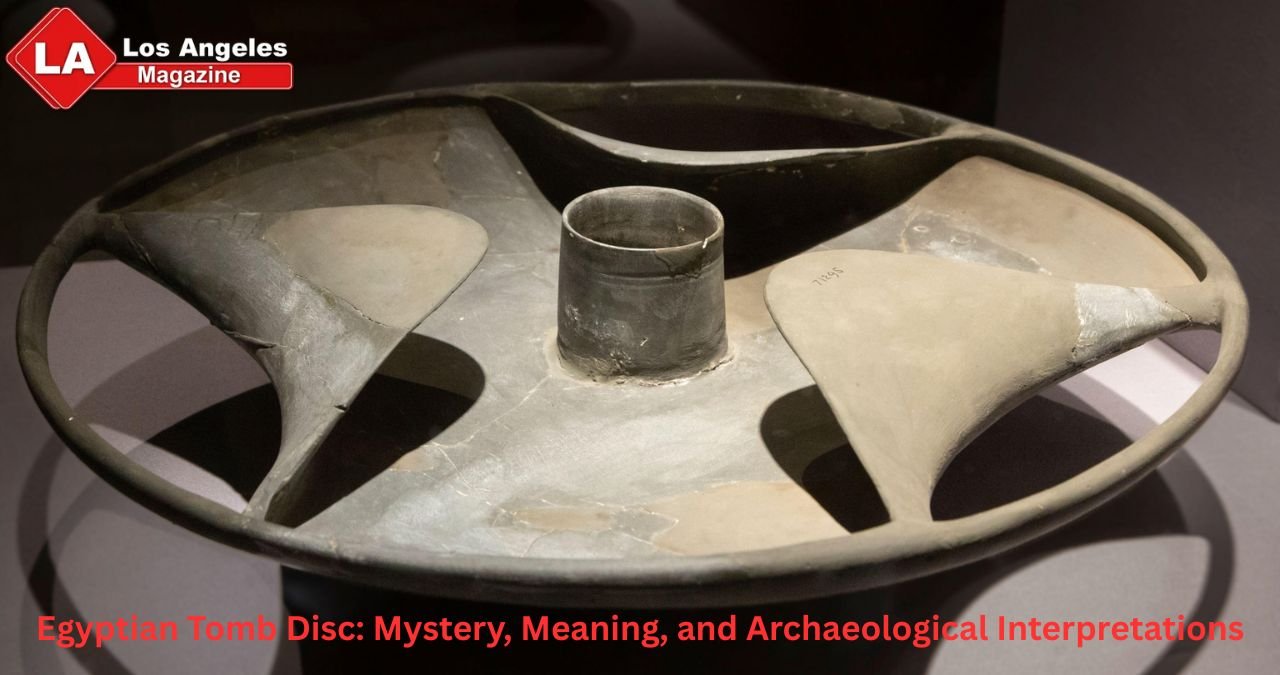
The term “Egyptian tomb disc” is often used in discussions of ancient artifacts discovered in burial sites across Egypt. While it does not refer to a single universally defined object, it generally describes circular or disc-shaped items found in tombs that may have served symbolic, ritual, decorative, or functional purposes. These artifacts continue to attract interest from archaeologists and historians because of their mysterious nature and the variety of interpretations surrounding them.
Understanding the “Egyptian tomb disc” requires exploring ancient Egyptian burial customs, religious beliefs about the afterlife, and the material culture used in funerary contexts. Ancient Egyptians placed great importance on preparing the dead for the journey into the afterlife, and objects placed in tombs often carried deep symbolic meaning.
Ancient Egyptian Burial Culture and Symbolism
In ancient Egypt, death was not seen as an end but as a transition into another form of existence. The tomb was designed as a complete environment for the deceased’s spiritual journey. Items placed inside tombs were carefully chosen to support the dead in the afterlife, including food offerings, amulets, statues, jewelry, and symbolic objects.
Disc-shaped artifacts found in tombs are believed to be part of this symbolic system. Circular shapes were highly significant in ancient Egyptian cosmology. The circle represented eternity, infinity, and the cyclical nature of life, especially the daily journey of the sun god Ra across the sky.
Because of this symbolism, a tomb disc may have been used as a representation of:
- The sun and divine protection
- Eternity and rebirth
- A spiritual seal or protective emblem
- A ritual object connected to burial ceremonies
However, it is important to note that not all discs found in tombs share the same function or meaning. Their interpretation often depends on their material, inscriptions, and archaeological context.
Materials and Craftsmanship
Egyptian tomb discs, depending on their discovery, have been made from a variety of materials including:
- Gold and electrum (a gold-silver alloy)
- Bronze and copper
- Faience (glazed ceramic material)
- Stone such as limestone or alabaster
- Wood or composite materials in rare cases
The choice of material often reflected the status of the deceased. High-ranking individuals such as nobles, priests, or royalty were more likely to be buried with finely crafted golden or decorated items, while common burials contained simpler versions made from clay or stone.
Craftsmanship varied significantly. Some discs are plain and unmarked, while others feature intricate engravings, religious symbols, or inscriptions in hieroglyphs. These decorations can include depictions of gods, protective spells, or solar imagery.
Possible Functions of Tomb Discs
Because “Egyptian tomb disc” is not a standardized archaeological category, scholars have proposed several possible functions for such objects. The most widely accepted interpretations include:
1. Funerary Amulets
Some discs may have served as protective amulets placed within tombs or on the body of the deceased. In ancient Egyptian belief, amulets provided magical protection against dangers in the afterlife. A disc-shaped amulet could symbolize divine protection or eternal life.
2. Decorative Elements
Certain discs may have been decorative ornaments attached to clothing, coffins, or burial equipment. The circular form and polished surface would have made them visually striking, especially when made from precious metals.
3. Ritual Objects
Some researchers suggest that tomb discs were used during burial rituals performed by priests. They may have played a role in ceremonies intended to guide the soul of the deceased into the afterlife.
4. Symbolic Solar Representation
Given the importance of sun worship in ancient Egyptian religion, many disc-shaped artifacts are believed to represent the sun. These objects could symbolize rebirth, regeneration, and the eternal cycle of day and night.
5. Weighing or Functional Tools (Less Common Theory)
A minority of interpretations suggest that some discs may have had practical uses, such as weights or parts of equipment. However, this theory is less common in funerary contexts, where symbolic meaning typically dominates.
Archaeological Discoveries and Context
Tomb discs have been discovered in various archaeological sites across ancient Egyptian burial grounds, including royal tombs in the Valley of the Kings and smaller burial sites belonging to priests and officials. However, because many early excavations were not systematically documented, the exact origin of some discs remains uncertain.
Modern archaeology places strong emphasis on context—meaning the location, surrounding artifacts, and burial structure are all crucial in interpreting the purpose of a tomb disc. Without context, it is difficult to determine whether a disc was symbolic, decorative, or functional.
In some cases, discs found near the chest or head of a mummy suggest a protective or amulet-like purpose. In other cases, discs found among grave goods may have been part of larger ceremonial sets.
Religious and Mythological Significance
Religion played a central role in ancient Egyptian life, and this is clearly reflected in burial objects. The disc shape is closely linked to solar theology, particularly the worship of Ra, the sun god. The daily rising and setting of the sun symbolized death and rebirth, making it a powerful metaphor for the afterlife.
Some scholars also connect disc-shaped objects to the concept of “maat,” the principle of cosmic order and balance. In this interpretation, the disc could represent harmony between life and death, chaos and order, or earth and heaven.
The presence of such symbolism in tomb objects highlights how deeply spiritual beliefs were embedded in everyday life and death rituals.
Modern Interpretation and Debate
Today, historians and archaeologists continue to debate the exact meaning of Egyptian tomb discs. The lack of standardized labeling in early excavation records makes it difficult to classify them with certainty. As a result, the term is often used broadly rather than as a precise archaeological category.
Some experts argue that what is referred to as a “tomb disc” may actually encompass several different artifact types that were grouped together due to their shape rather than function. Others believe that future discoveries and improved analysis techniques, such as material composition testing and 3D imaging, may help clarify their purpose.
Cultural Impact and Popular Interest
Outside academic circles, Egyptian tomb artifacts—including discs—have captured the imagination of the public. They are often featured in documentaries, museum exhibitions, and popular media focused on ancient mysteries. Their mysterious appearance and unclear function make them especially intriguing to enthusiasts of ancient history.
Museums in Egypt and around the world continue to preserve and display similar artifacts, helping audiences connect with the rich cultural heritage of ancient Egypt.
Conclusion
The “Egyptian tomb disc” remains a fascinating and somewhat mysterious artifact type within the study of ancient Egyptian archaeology. While its exact purpose can vary depending on context, most interpretations point toward symbolic, religious, or protective functions tied to burial practices and beliefs about the afterlife.
Whether seen as a solar symbol, a protective amulet, or a ritual object, the tomb disc reflects the deep spiritual worldview of ancient Egyptians and their desire to ensure safe passage into eternity. As research continues, these artifacts may reveal even more about one of history’s most complex and influential civilizations.