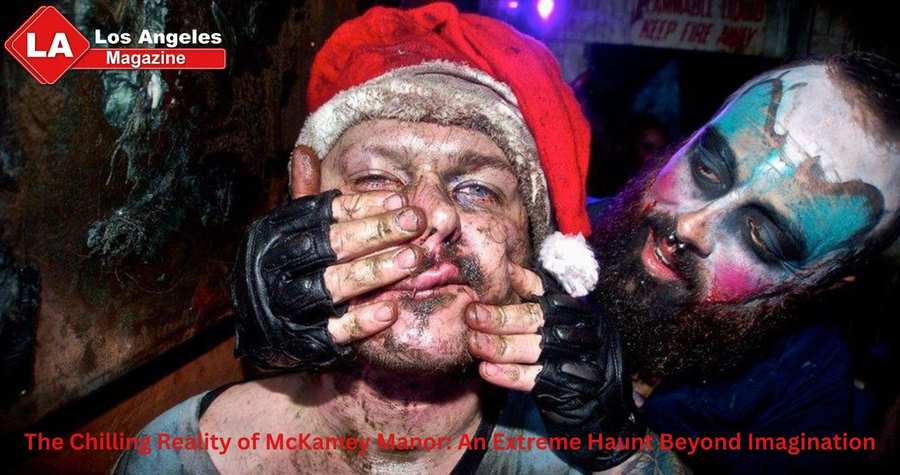
Imagine handing over your basic human rights for a bag of dog food, only to be blindfolded, restrained, and pushed to your psychological limits. Thousands of adrenaline junkies join a multi-year waiting list for this exact experience every single year.
Most Halloween fans visit haunted attractions for cheap jump scares, fake blood, and plastic chainsaws. However, McKamey Manor throws standard safety guidelines out the window to deliver raw, unfiltered horror.
What actually happens behind closed doors when the simulation starts? We break down the grueling entry contract, the legal loopholes, and the psychological impact of the world’s most controversial attraction.
What Makes an Extreme Haunted House Different?
Traditional haunts rely on actors jumping out from dark corners to startle visitors for a split second. An extreme haunted house breaks the physical boundary by allowing actors to touch, restrain, and psychologically test participants over several hours.
Visitors do not simply walk through dark hallways with strobe lights and loud sound effects. They are pulled into an interactive horror movie where they become the central target in a custom-tailored simulation.
The experience utilizes extreme physical stress, severe temperature changes, sensory deprivation, and forced physical challenges. No two runs are identical because every tour adapts to exploit individual phobias.
The Evolution of Shock Entertainment
Interactive fear experiences have shifted from theatrical set pieces to intense stress simulations over the past decade. Modern thrill-seekers actively demand deeper immersion that blurs the line between acting and reality.
Sensory Deprivation and Psychological Pressure
By taking away sight through hoods or total darkness, actors eliminate a participant’s sense of control. This psychological pressure creates panic long before any physical obstacles ever begin.
Behind the Mind: The Biography of Russ McKamey
The entire operation is directed by Russ McKamey, a former Navy veteran with a passion for theater and video editing. His military background heavily influences the structured discipline and psychological intimidation found inside his venue.
What started as a lavish home haunt in San Diego eventually transformed into a viral global phenomenon. Over time, operations expanded into Tennessee and Alabama to utilize rural land for longer, more intense simulations.
Critics view him as a master manipulator who uses media coverage to generate hype, while supporters see an innovative director who understands fear better than anyone else. His custom tours use personal phobias to create an unforgettable mental ordeal.
| Feature | Quick Bio Details |
| Creator Name | Russ McKamey |
| Background | U.S. Navy Veteran, Theater Director |
| Origin Location | San Diego, California |
| Current Locations | Tennessee & Alabama |
| Admission Fee | One bag of dog food |
| Core Concept | Customized psychological & physical survival simulation |
The Notorious Waiver and Rules: What You Must Sign
Getting accepted requires passing a strict screening process long before stepping foot onto the property. Applicants must complete a detailed background check, pass a drug screening, and present proof of physical fitness signed by a licensed doctor.
The famous waiver and rules contract stretches over forty pages long and details extreme physical scenarios. Participants must consent to physical restraint, exposure to mud, forced submersions, and intense verbal interrogation without backing out.
Finding the exact location and cost often surprises newcomers looking to purchase a basic ticket online. Admission has never been measured in cash; instead, participants pay with a single bag of dog food for the owner’s rescue pets.
Mandatory Entry Requirements
- Full physical and mental health clearance from a certified physician.
- Passing an on-site drug screening immediately prior to entry.
- Completion of a detailed background check and phone interview.
- Signing a forty-page legal waiver detailing physical risks.
- Providing a single bag of dog food as the total entrance fee.
Legal Controversies and Public Backlash: Is It Legal?
Critics continuously ask one major question: is it legal to subject people to these extreme conditions? Because participants sign extensive consent forms and film video waivers, legal authorities face complex hurdles when attempting to intervene.
Hundreds of thousands of concerned citizens have signed online petitions calling for local law enforcement to shut down the property permanently. Allegations range from physical battery to claims that safe words are ignored during intense moments.
Local sheriffs and legal authorities monitor the property to ensure voluntary consent remains legally valid. Despite continuous public outrage and international press scrutiny, the operation continues to exist within a unique legal gray area.
Physical Stress vs. Illegal Assault
The legal debate centers around personal consent and whether an individual can legally agree to physical harm. Defense attorneys argue that signed documentation and pre-recorded oral consent protect the organizers from liability.
Public Petitions and Police Investigations
Local police departments regularly receive welfare calls regarding the property from worried onlookers. However, because participants voluntarily arrive and record statements on camera beforehand, criminal charges rarely stick.
Comparing Extreme Horror to Traditional Haunted Attractions
Understanding how intense shock simulations differ from mainstream Halloween haunts highlights why the concept remains so controversial. Standard attractions prioritize light entertainment, while extreme venues focus on endurance testing.
| Comparison Factor | Standard Haunted House | McKamey Manor |
| Average Duration | 15 to 30 Minutes | Several Hours (Customized) |
| Actor Contact | Strict No-Touch Policy | Full Physical Contact & Restraints |
| Safe Word | Not Needed / Exit Doors | Dictated by Organizer / Medical End |
| Admission Cost | $25 – $75 Cash | One Bag of Dog Food |
| Completion Rate | 99% Finish | 0% (Nobody Has Finished Current Version) |
Analysis of this data reveals that traditional haunts sell temporary thrill, while custom shock simulations demand complete physical submission. The contrast explains why mainstream audiences view extreme venues with a mix of fascination and dread.
Frequently Asked Questions
Has anyone ever completed the full tour?
No participant has ever completed the modern, multi-hour iteration of the tour. The physical challenges and psychological exhaustion force everyone to break down long before reaching the end.
What is the actual price of admission?
The entry fee is simply a single bag of dog food donated to the owner’s pet shelter. There are no expensive cash tickets sold to the general public.
Where is the location of the attraction?
Operations are primarily located on private property in rural Tennessee and Alabama. The exact address is only disclosed to participants who pass all background checks.
What happens if you want to quit early?
While participants are told about safe words, many video logs show intense psychological pressure before an exit is granted. Medical staff remain present to stop the tour if vital signs reach dangerous levels.
Is the 40-page contract legally binding?
Yes, the legal document is designed by legal professionals to protect the operation from liability. It explicitly outlines physical hazards, severe emotional distress, and potential personal injuries.
Why do law enforcement officers allow it to stay open?
Because participants are legal adults who voluntarily sign detailed consent forms and record video statements, law enforcement cannot easily intervene without evidence of clear illegal activity.
Final Verdict on Extreme Terror
Thrill-seekers will always search for experiences that push the boundaries of human fear and mental resilience. While traditional haunted houses satisfy basic curiosity, extreme venues force individuals to confront their rawest physical limits.
Before considering an application for an extreme haunt, carefully weigh the physical risks and mental strain that remain long after the experience ends. True horror begins the moment you realize you cannot turn off the experience on command.
updated date 19-sep-2026